Does “ski-in/ski-out” in Snowmass mean you click in at your door, or does it mean a short walk across a plaza in ski boots? If you have shopped mountain homes, you know the phrase gets used loosely. Your goal is simple: understand what access you are actually buying and how it will feel day to day. In this guide, you will learn the practical definitions used in Snowmass Village, how the mountain’s layout affects access, and exactly how to verify a listing’s claim. Let’s dive in.
What ski-in/ski-out really means
There is no single legal or industrywide definition of “ski-in/ski-out.” In practice it is marketing shorthand. That is why you should evaluate how direct the route is from the door to in-bounds terrain and back again.
Use this simple taxonomy to set expectations:
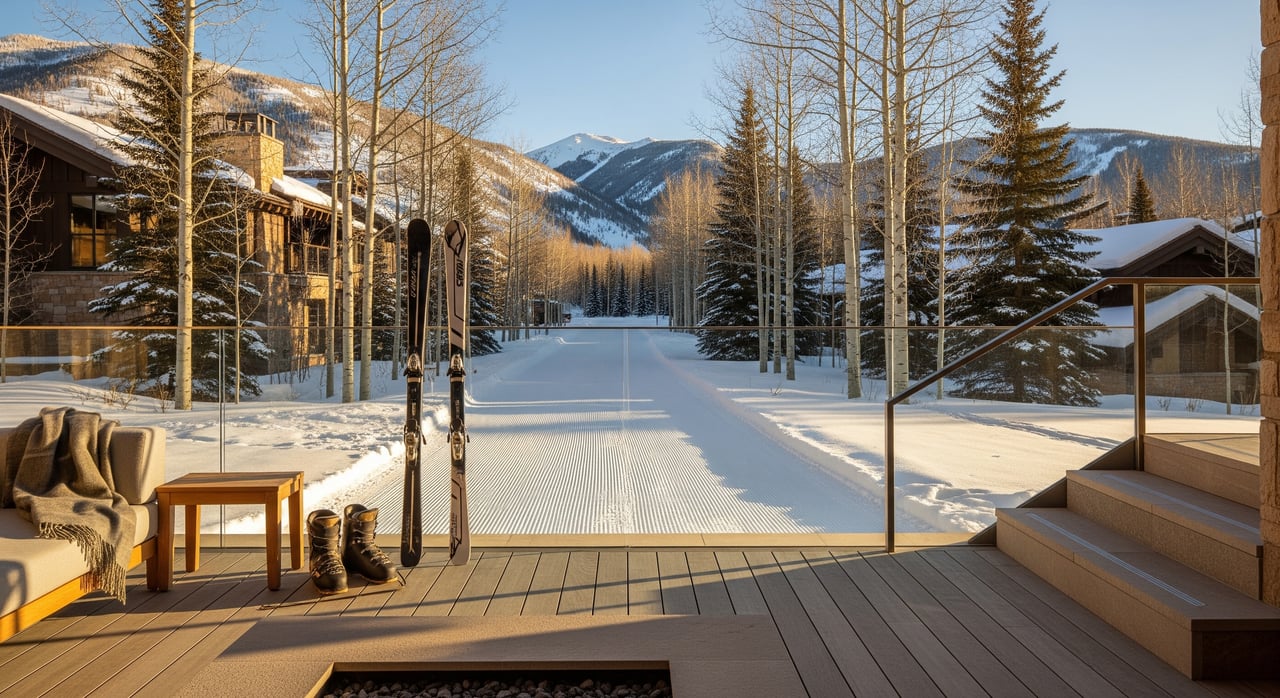
- True ski-door, on-piste: You step out the door and onto a marked, in-bounds ski trail or skiway without crossing a road or walking on hard pavement.
- Ski-access via connector: A short, groomed connector links the property to resort terrain. You may boot across a brief, flat segment or boardwalk. These are often maintained by an HOA or the resort.
- Lift-adjacent, short walk: The property sits near a lift or gondola plaza. It is convenient, but you will walk across a plaza or short service road.
- Walk-to or shuttle-close: A multi-minute walk on sidewalks or paths to lifts or shuttle stops. It can work well, but it is not the same as direct slope access.
- Shuttle-required or drive-and-park: Off-slope locations that depend on village shuttles or driving to a base area.
- Ski-out only: You can ski down to the property, but getting back up requires a lift, gondola, shuttle, or walk.
In Snowmass, you will also see “ski-in/ski-out” used for properties with a groomed connector plus a short pedestrian segment, like crossing a paved plaza. Many buyers accept this as high-convenience access. The key is to know exactly what the route requires.
Snowmass layout and access
Snowmass Village covers a large footprint with several base areas. Where a property sits relative to these zones shapes how “ski-in/ski-out” works in real life.
Multiple base areas
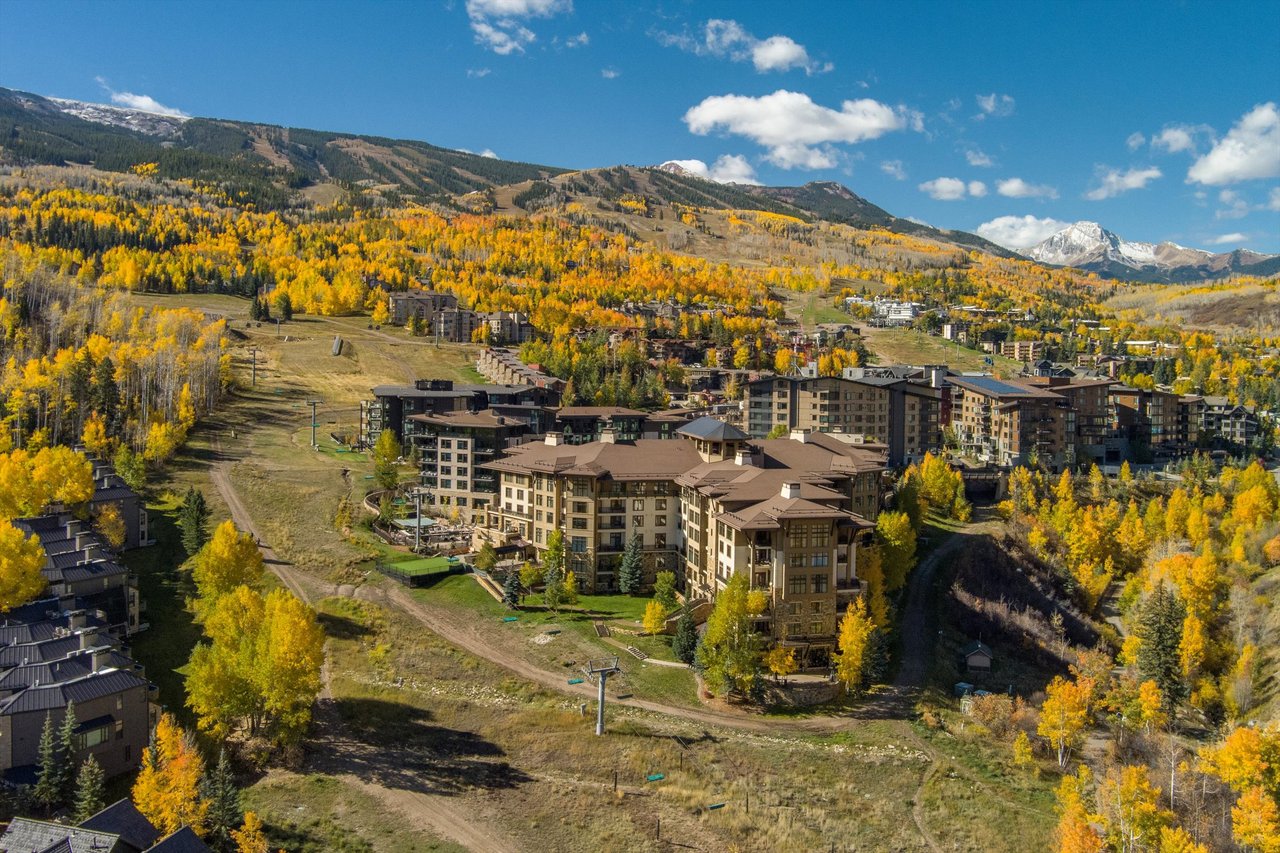
The resort functions across distinct clusters, including Base Village, the Elk Camp area, the Snowmass Mall, and surrounding neighborhoods. Buildings next to lift terminals or groomed skiways can offer true door-to-slope access. Others are across a short road or plaza. In those cases the route may include a brief walk in boots.
Connectors and skiways
Designated, groomed connectors link runs to base zones. A property that connects to a maintained skiway usually offers a smoother experience than one that relies on an unofficial shortcut. Verifying whether a connector is resort-maintained or private is an important step.
Seasonality and operations
Lift hours, snowmaking, and grooming affect usability. Early season or low-snow periods can limit some short connectors until conditions improve. If a connector is only reliable once natural snowfall builds up, plan for a different routine during those weeks.
Shuttles and transit
Snowmass Village runs free local shuttles and benefits from regional transit. These options reduce the inconvenience of being slightly off slope. That said, relying on a bus is different from clicking in at your door. You still handle skis, boots, and timing.
Safety and boundaries
In-bounds routes are controlled by the resort. Shortcuts across roads, private driveways, or outside the ski area boundary may be less safe and less predictable. Confirm whether your path stays within controlled, permitted terrain.
Read maps and measure the route
Photos can be deceptive. A window view of a lift does not tell you what the actual path demands. Use maps and measurements to see the full picture.
Which maps to use
- The official trail map shows runs, lift terminals, and some connectors. It is your starting point for understanding terrain relationships.
- Base-area site plans and plat maps show building footprints, plazas, pedestrian bridges, roads, and service areas.
- Aerial imagery helps you see grade changes and measure the real route from a building to the nearest trail or lift.
How to measure access
- Trace the exact ski or walking path, not a straight line. Follow the contour of trails, connectors, sidewalks, and plazas.
- Time the route in minutes with gear. A 2-minute paved walk in boots may feel longer than it sounds.
- Note elevation. Downhill to the lift and uphill home can be easy one way and hard the other. Check whether the return requires a lift, shuttle, or stairs.
- Identify any crossings. Roads and service lanes add steps and can require boots off in storm cycles.
Common Snowmass scenarios
Here are typical access profiles you will see in Snowmass Village and how they play out day to day.
True front-door ski access
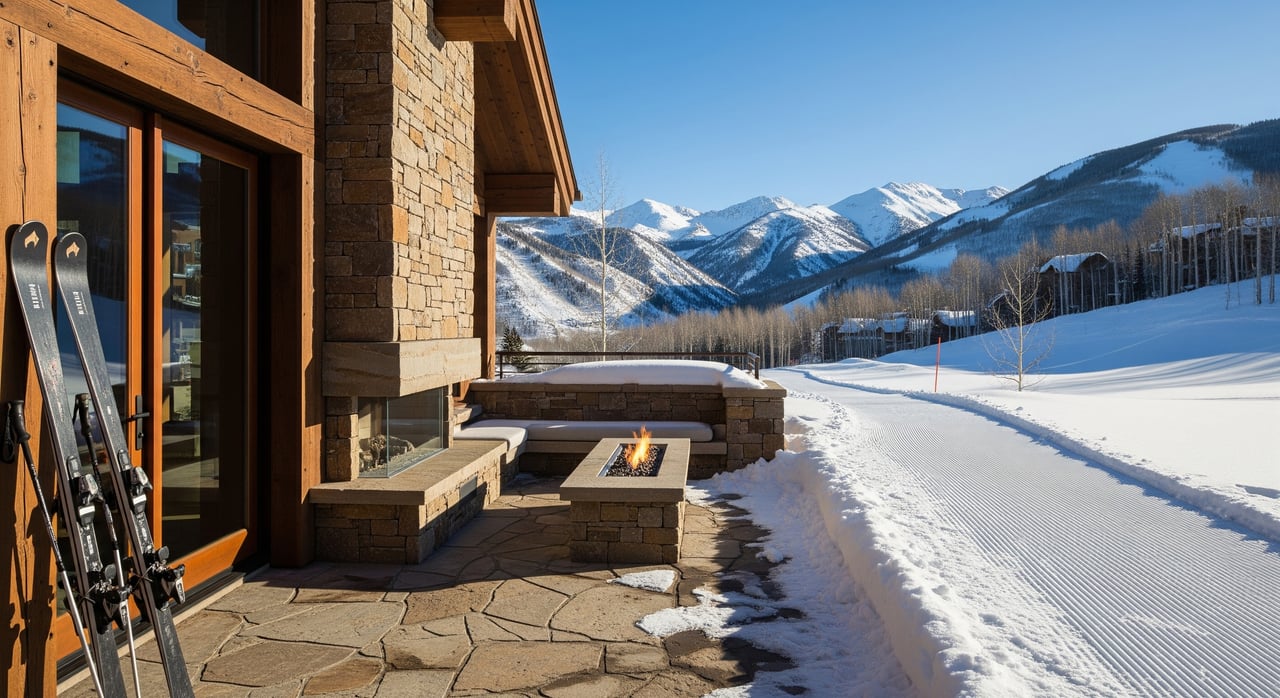
You put skis on at the door and glide onto a groomed connector or marked run. This is the gold standard for convenience. It tends to be the strongest claim of “ski-in/ski-out” and is easy for guests to understand.
Connector plus short plaza segment
A designated, groomed skiway gets you close, and a brief paved crossing completes the route. Many buyers consider this functionally ski-in/ski-out. Make sure the listing is explicit about the exact path.
Ski-out only
You can ski back to the property from above, but morning access requires a lift, gondola, shuttle, or walk. This setup is great for end-of-day returns, but it changes the rhythm of first tracks and quick laps.
Lift-adjacent across a road
A building sits near a lift terminal, but you must cross a short road or service lane. It is very convenient, yet different from clipping in at your door. Expect more boot commuting and a pedestrian return.
Off-slope with reliable shuttle
Not ski-in/ski-out by most standards, but very usable thanks to frequent shuttle service. This can be an efficient alternative if price and space are priorities over direct slope access.
Due diligence checklist
Treat “ski-in/ski-out” as a claim to verify. Use documents, a site walk, and clear questions to confirm the experience.
Documents to request
- A route diagram from the seller: front door to connector to lift or run, with distances and elevation.
- Recorded easements or deeds that grant ski or pedestrian access if the route crosses private land.
- HOA covenants and maintenance plans noting who maintains connectors, snow removal, lighting, and signage.
- Resort or municipal documentation showing any designated skiways and whether the route is within permit lines.
- Site plans for nearby lifts and plazas, especially in active development areas where layouts can change.
Field verification steps
- Walk the full route in ski boots with gear to feel the real effort required.
- Ski the route in and out during operating hours if possible and time it door to lift.
- Note where you must carry skis, remove boots, climb stairs, or cross roads.
- Confirm with the HOA or property manager how and when the connector is groomed or cleared after storms.
- Ask resort operations about seasonal closures for events or maintenance that could affect the route.
Key questions to ask
- Is the connector shown on the official trail map, and if not, is it private and maintained?
- Who is responsible for keeping the connector passable in winter?
- Does the route stay within resort permit boundaries or cross private land?
- Can you ski both out and back, or do you need a lift or shuttle to return?
- Are there planned projects nearby that could change access next season?
Red flags to watch
- Marketing photos of slopes without a clear path shown from the door.
- Vague phrases like “minutes to lifts” without a diagram or measurements.
- No recorded easement where one is needed for a critical connector.
- No HOA commitment to maintain a path that the listing relies on.
Safety, maintenance, and insurance
Access affects more than convenience. It also ties into safety and responsibility.
- In-bounds connectors benefit from patrol oversight and grooming. Private or out-of-bounds shortcuts do not.
- Clarify who handles snow removal, grooming, lighting, and signage on any connector you depend on.
- Ask your insurance provider and the HOA about winter ingress and egress risks, such as slips on icy surfaces.
When to lean on a local expert
New construction, base-area changes, and seasonal variables can make access confusing. A local expert who knows Snowmass Village can classify options consistently and verify routes in person.
Situations where expert help adds value:
- You are new to resort real estate and want a curated list graded by access type, from true ski-door to shuttle-required.
- A base area has recent or ongoing development that may change paths or plazas.
- A listing is ambiguous about the route, and you want recorded easements, HOA maintenance language, and current photos or video under typical conditions.
- You want an in-season test or video of the route, including timing, stairs, crossings, and return options.
If direct slope access is a priority, a clear plan makes all the difference. Start with definitions, request documents, measure the route, and test it with gear. If you want a curated search focused on the exact access experience you prefer, connect with Andrew Albee for local guidance and on-the-ground verification.
FAQs
What does “true ski-in/ski-out” mean in Snowmass?
- It means you step from your door onto a marked, in-bounds trail or groomed connector without crossing a road or walking on hard pavement.
How should I verify a ski access claim before I buy?
- Request a route diagram with distances, obtain easements and HOA maintenance details, walk and ski the route with gear, and time the door-to-lift experience.
Are Snowmass shuttles a substitute for slope access?
- Shuttles reduce inconvenience for off-slope homes, but they are not the same as clicking in at your door since you still handle timing, gear, and transit.
What is “ski-out only,” and is it common?
- Ski-out only means you can ski down to the property but need a lift, gondola, shuttle, or walk to get back up, which is a common setup on some hillside locations.
Do seasonal changes affect my ability to ski in or out?
- Yes. Early season and low-snow periods can limit short connectors until snowfall and grooming make them reliable, so plan for backup options.
Who maintains the connector if my route is part private, part resort?
- Confirm in writing whether the resort, HOA, or municipality is responsible for grooming, snow removal, lighting, and signage along each segment of the route.